Roll-Fed vs. Cut-Sheet Input: Choosing the Right Feed Format for Mail Inserting
Rolls reward continuity, sheets reward flexibility. Your job mix decides which one belongs on your floor.
Walk through two mailing operations running similar volumes, and you can see the difference before a single envelope is stuffed. One stages skids of pre-cut stock beside its sheet feeders. The other mounts a continuous roll at the head of the line and lets the web run. Machine speed gets most of the attention when operations compare inserting equipment, but the input format — cut sheets or a continuous roll — shapes staffing, changeovers, floor space and mail integrity long before rated speed ever matters. Here is what each format does well, where each one struggles and how to decide which belongs in your operation.
What Feed Format Means in Mail Production
Cut-sheet input is the familiar model. Paper arrives pre-cut, operators load reams or skids into sheet feeders, and the inserting system pulls one piece at a time. Every document that enters the line already exists as a discrete sheet, so the equipment’s job is to feed, fold, gather and insert those sheets accurately at speed. The performance of the whole line often comes down to how well the feeders handle the stock they are given, which is why we have written before about what makes or breaks a feeder system.
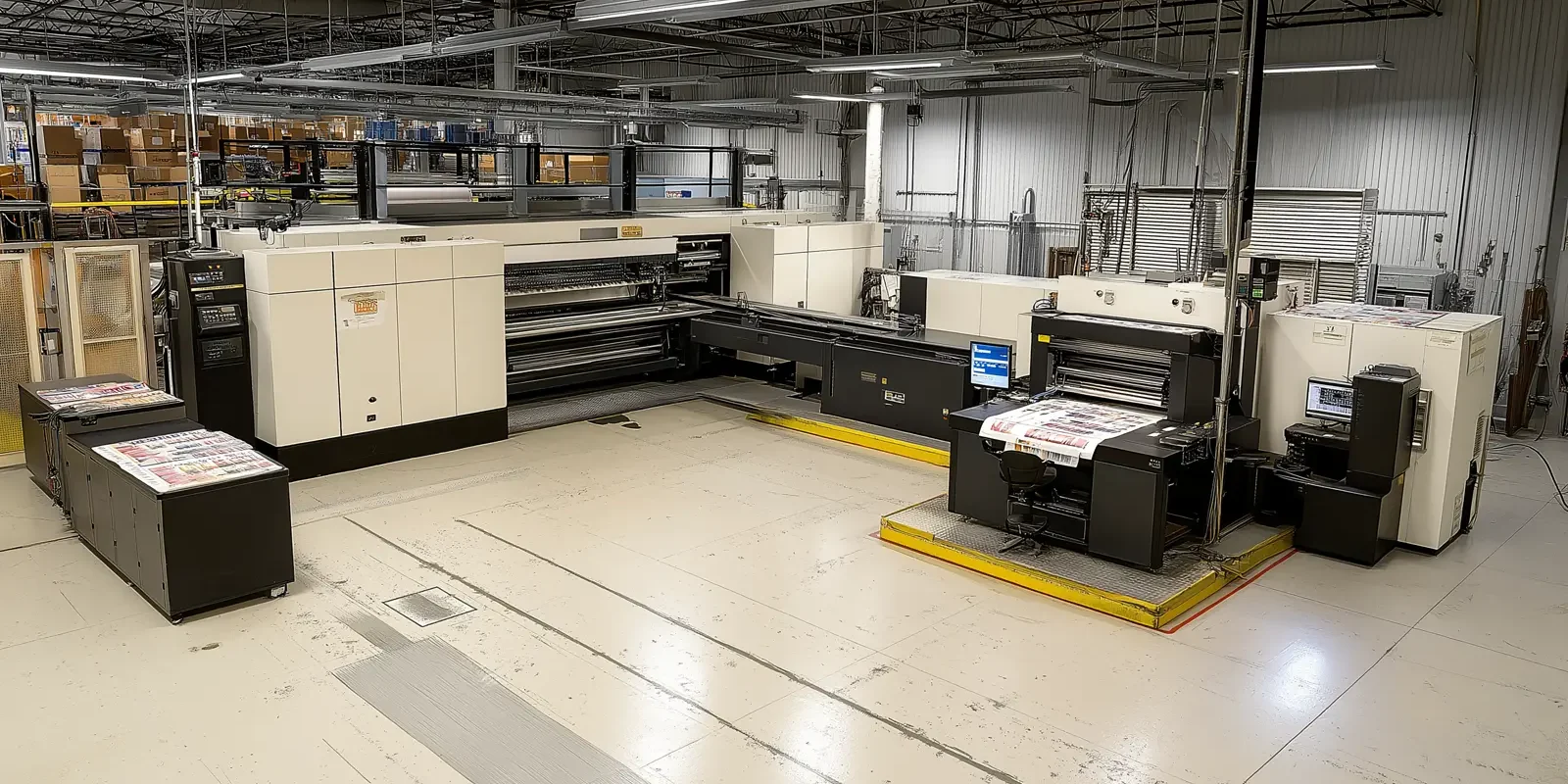
Roll-fed input works from a continuous web instead. Paper comes off a roll — printed inline in some configurations, supplied as preprinted roll stock in others — and is cut into documents ahead of insertion. When printing happens inline, the document is created as part of the same continuous process that inserts it, which is why fully integrated roll-fed workflows are often described as white paper in, finished mail out. Continuous webs are standard across much of production work — label printing and converting operations run on them to keep material moving through connected processes — and roll-fed mail borrows that same principle even though the equipment and end product differ.
What is a roll-fed inserting system?
A roll-fed inserting system is a mail production line that takes its input from a continuous roll of paper rather than stacks of pre-cut sheets. Depending on the configuration, the web is printed inline or arrives preprinted, then is cut, folded and transferred into insertion without manual sheet handling between stages. In its most integrated form, the result is a single continuous process from blank roll to finished, sealed mail piece.
Where Cut-Sheet Input Fits
Cut-sheet input earns its place through flexibility. A cut-sheet line can often move from a heavier letterhead in the morning to a lighter statement stock in the afternoon — operators swap the pile, adjust the feeder and keep moving rather than changing the broader line configuration. Operations with a varied job mix, frequent format changes or a steady stream of short runs tend to get more from that adaptability than they would from a web’s raw continuity. Cut-sheet material handling is also familiar territory for many operators, especially in facilities already built around preprinted documents and feeder-based workflows — the equipment still demands trained operation, but the loading process fits naturally into an existing production environment.
It helps to drop the assumption that cut sheets are the old way and rolls are the future. For many operations, cut-sheet input is simply the right fit for the work. Inserters built for that world can be genuinely fast and forgiving — when volumes spike, systems like the FlowMaster RS absorb surge work across a wide range of insert materials without dedicated setups for each job. The format is a tool, not a generation, and the job mix decides which tool fits.
Where Roll-Fed Input Pulls Ahead
The case for roll-fed input starts with touches. Every time a person handles paper — moving skids, loading trays, jogging piles — the operation spends labor and accepts a small risk of damage or misordering. A roll consolidates thousands of documents into a single material supply, so operators replenish the line far less often — though how much labor that saves depends on roll size, splicing capability and how the unwind is configured. Fewer touches also mean fewer chances for stock to pick up dents, curls and moisture that cause feeding problems downstream.
Continuity pays off in consistency too. A properly set up web provides steady material flow without the repeated separation and pickup events of individual sheet feeding, though web tension, registration and cut accuracy still have to be controlled throughout — the advantage comes from a well-integrated line, not the roll format alone. Floor logistics change as well: roll-fed lines concentrate material supply and web-handling equipment at the front of the system, while cut-sheet operations need staging space near multiple feeders. For steady, high-volume document streams — statements, notices, compliance mail — the roll-fed model turns insertion into something closer to a continuous manufacturing process than a batch one.
What determines the speed of a roll-fed inserting line?
The speed of a roll-fed workflow depends on the cutter, folder, inserter and transfer components operating in sync, not on the roll itself. The inserter is only one part of that equation: the BlueCrest Epic Direct Mail inserter, for example, is rated at up to 24,000 cycles per hour on tri-fold work. Whether an integrated line sustains that pace depends on every upstream and downstream component keeping up.
The Trade-Offs That Decide It
Job mix is the first axis. Roll-fed input rewards long, uniform document streams because the format’s advantages compound over uninterrupted runs; a shop that changes document formats several times a day gives much of that advantage back in web changeovers. Stock is the second. A web commits you to roll stock in the available weights and finishes, while cut-sheet lines can run nearly any sheet a feeder will accept, including preprinted shells and specialty materials.
Staffing and space follow. Roll-fed lines shift labor away from constant loading toward monitoring and quality control, which changes the skill profile more than the headcount. Cost drivers move in both directions: roll stock, splicing and web-handling equipment raise the investment on one side, while reduced handling labor, lower waste during stable production and longer uninterrupted runs help earn it back on the other. Which side wins depends on volume stability and job mix rather than any universal rule — which is exactly why the decision deserves an honest look at your actual production calendar, not a brochure comparison.
Can one operation run both formats?
Yes, and many do. A common arrangement pairs a roll-fed line for steady high-volume work with cut-sheet capacity for variable, short-run and specialty jobs. The two formats cover each other’s weaknesses, and the mix can shift over time as the operation’s work changes.
Integrity and Tracking on a Continuous Web
Neither format changes what mail integrity requires — every piece accounted for, every insert matched to the right recipient. File-based processing and piece-level tracking can support either format, and the accountability standard your clients expect does not bend to how documents arrive. In statement and compliance work especially, accounting is non-negotiable, no matter how the paper enters the line. What changes is the layout: where documents are read, verified and recovered within the line and what happens when a piece is pulled.
On a roll-fed line, read points and verification controls are positioned around the web-cutting, folding and transfer stages so each document stays associated with the correct mail piece. Cut-sheet systems use many of the same piece-level controls, but their read points are arranged around individually fed documents rather than a continuous web. In either format, file-driven production software can log damaged or diverted pieces for controlled reprinting, rather than requiring operators to hunt them down in a physical stack. These are design questions an integrator works out when the line is specified, not problems discovered on the floor. The principles behind them are the same ones that make inserter verification matter for direct mail accuracy in any format.
Making the Call for Your Operation
Start with the job mix, honestly tallied. Roll-fed input fits operations built on stable document streams, long runs, file-driven production and infrequent material changes; cut-sheet input fits frequent format changes, preprinted shells, specialty stocks and shorter or more varied jobs; and a hybrid floor pairs the two when substantial recurring work runs alongside variable production. Volume stability sharpens the picture, since roll-fed advantages depend on the work actually showing up week after week. Staffing, floor space and growth plans round out the call.
This is the kind of decision we work through with operations across Ohio and the Midwest. Add-Jet integrates complete production lines — printing, vision, transport and inserting — so the format question gets answered as part of a whole-line design rather than a single equipment purchase. If you are weighing the two formats, our high-speed mail inserting systems page is a good place to explore the equipment behind different production approaches, and our team can walk you through the rest on real equipment at our Miamisburg demo floor. Reach out, and we will start from your production calendar, not ours.